Thomas Scoon
American, b. 1961
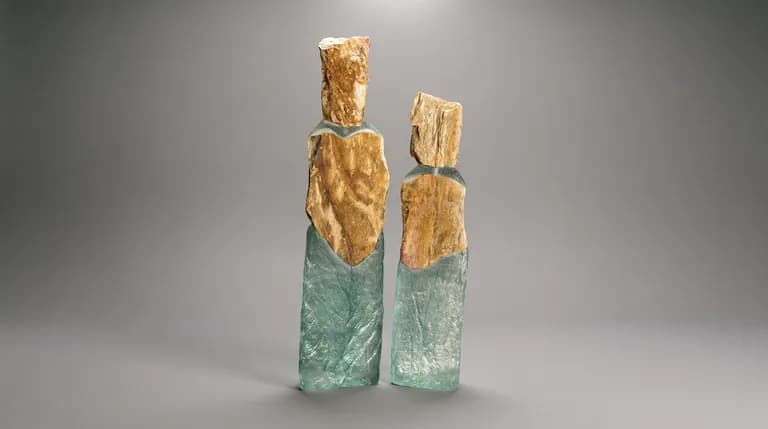
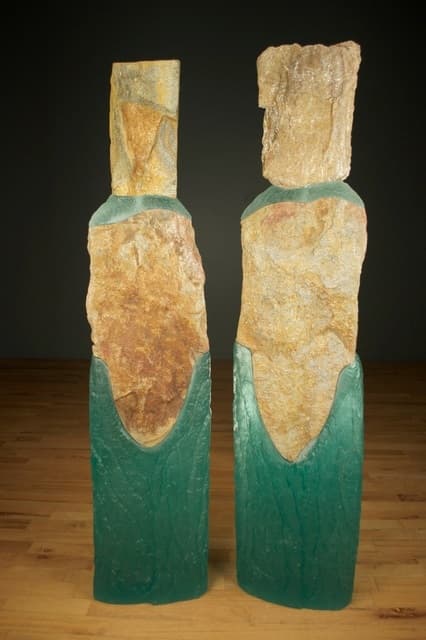
Inspired by the monolithic sculptures at Easter Island, Thomas Scoon is primarily known for his anthropomorphic sculptures of granite and sequenced kiln-cast glass. Alternating transparency and opacity, the sculptures are simultaneously a contained unit and a part of the environment, allowing light to pass through them. “The glass shapes the rest of the figure, in a very organic sense, much like ice,” he says. “The translucent quality of the glass is activated best by natural sunlight and in this way the figures are given their spirit or soul.” Scoon sees the process of uniting the fire of kiln-casting with the manipulation of stone as metaphorically related to the duality of soul and body. By grouping his figures in natural environments, he explores familial and genealogical relationships in a universal context.
Artist statement
"In my work, I create figures from sequences of stone and glass. The figures rise up from the external landscape where I live, a place filled with remnants of stonewalls and glacial erratic. I gather stones from quarry rubble and from New Hampshire neighbors who allow me to choose stone from their land. The glass portions of the sculpture are combined with these found stones, suggesting human figures, I try to choose rocks that evoke the feeling and gesture of human forms, specifically torsos and heads. I will look for a flat rock with a curved edge and tapering form to suggest torsos or the triangulation of stone with a cleft that may hint of a head.
I do very little to alter these stones in the process of making sculptures, perhaps chiseling or cutting a bit, instead I seek to emphasize qualities already naturally present. The layering of kiln-cast glass with the stone allows light to pass through the figures and what I hope, embodies the spiritual and physical essence of human nature into the sculpture. By marrying fire and materials of earth with a modern process of casting glass, there is a fusion of composition and chance.
Given the range of scale and opportunity to group figures together, there are layers of interpersonal drama, gender, and generational concerns. The combination of materials expresses both the fragility and enduring qualities of humanity. I believe the figures are universal in that they speak directly to what is elemental rather than superficial about us and our relationships to others. These qualities of spirit are nearly indefinable, of what we share in our immediate lives as well as through a common human history but it is what I want to capture in some small measure."